Godox AD800 Pro: B&H Photo / Amazon / Adorama
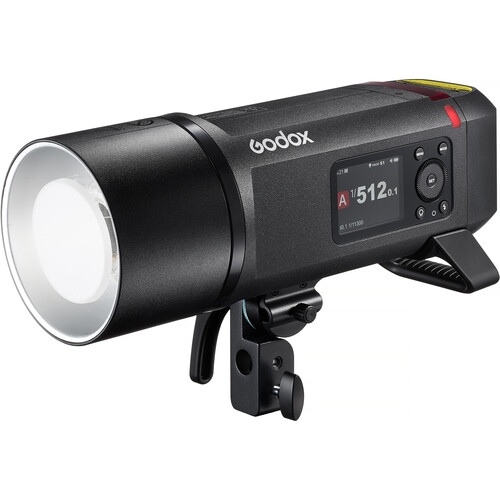
Meet the AD800Pro — an 800Ws battery-powered monolight built for location professionals. It delivers reliable main-light output even in direct sunlight, rapid recycle times and long battery life, and offers versatile wireless control plus TTL compatibility across major camera systems. Together, these features provide powerful, dependable performance for professionals in any environment.
Overpower the Sun
With 800 Ws of output, the AD800Pro delivers decisive main-light performance that overcomes bright sunlight. It yields up to 300 full-power flashes per charge and a fast recycle time of 0.01–1.5 s, keeping pace with demanding on-location shoots.
Precision Power Control
Power is adjustable across a 10-stop range (1/512–1/1) with 0.1-stop increments, enabling extremely fine exposure control. This level of precision makes the AD800Pro ideal for product and still-life work, layered multi-light setups, and any situation that demands subtle highlight and shadow placement.
Advanced Pro Modes
The AD800Pro includes pro-grade modes — Freeze, Stable Color-Temperature, HSS, Multi, and more — so photographers can reliably handle fast-action, product and color-critical work.
Freeze Mode: Ultra-short flash duration down to 1/35,710 s (t0.1) for razor-sharp captures of splashes, jumps and other fast motion.
Stable Color-Temperature Mode: Minimizes color drift as power changes (typical drift ≤ 100 K), ensuring consistent color across the output range.
Supports HSS (up to 1/8000s), Multi flash, and first- and second-curtain sync—covering everything from bright outdoor portraits to motion trails and creative strobe effects.
Triggering Versatility
Built around Godox’s 2.4 GHz X wireless system, the AD800Pro delivers robust, long-range wireless control — including one-tap pairing with X3Pro/X3 and full compatibility with other X-series transmitters. It also supports wired sync via a 3.5 mm PC jack and external 433 MHz receivers via USB-C, giving photographers multiple reliable triggering options for on-location and remote shoots.
Flexible Power Solutions
To keep you shooting without compromise, the AD800Pro supports multiple power options. The optional AC26 adapter enables direct AC operation for continuous power, while the optional UC-46 fast charger reduces battery charging time to about 1.5 hours.
Creative Accessory Ecosystem
Native Bowens Mount — Compatible with a wide range of light-shaping tools (softboxes, beauty dishes, grids, snoots, etc.), giving photographers instant access to an extensive professional modifier system.
Optional Extension Head (H600P) — Featuring a 2m cable, the H600P allows flexible light placement and lightweight handheld or boom-mounted setups.
Smart Tools, Effortless Control
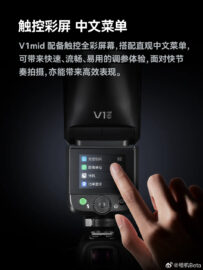
HD Color Screen
40W Bi-color Modeling Lamp
16 Color Group Indicators
| 800Ws | 300 Full-Power Flashes | 1/35710s Flash Duration |
| 0.01-1.5s Recyling | 1/512 Fine Power Control | 40 W Bi-Color Lamp |
Technical Data
| Model | AD800Pro |
| Wireless Receiver Unit Mode | Wireless Mode
(compatible with Canon E-TTL II, Nikon i-TTL, Sony, OM SYSTEM, Panasonic, Fujifilm, Leica, Pentax) |
| Flash Mode | Wireless off: M/Multi |
| Wireless receiver mode: TTL/M/Multi | |
| Guide No. (1/1 step) | 110 (IS0 100, in meters, with efficient reflector) |
| Flash Duration (t=0.1) | Normal: 1/350s ~ 1/11400s |
| Color: 1/350s ~ 1/9220s | |
| Freeze: 1/5020s ~ 1/35710s | |
| Power (1/1 step) | 800Ws |
| Power Output | 10 steps:1/512 ~ 1/1 (with 0.1 increment each step) Note: 9 steps in CCT mode. |
| Stroboscopic Flash | Provided (up to 100 times, 100Hz) |
| Sync Mode | High-speed sync (up to 1/8000 seconds), first-curtain sync, and second-curtain sync |
| Delay Flash | 0.01~30s |
| Mask | ✓ |
| Fan | ✓ |
| Beep | ✓ |
| Flash Duration Indication | ✓ |
| Display | Color screen |
| Modeling Lamp | |
| Max.Input Power | 40W |
| Brightness Range | 10%-100% |
| CRI | Average≈97 |
| TLCI | Average≈98 |
| CCT | 2800K-6000K |
| Wireless Flash (2.4G transmission) | |
| Wireless Function | Receiver, Off |
| Controllable Receiver Groups | 16: 0-9, A-F |
| Transmission Range | Approx.100m |
| Channels | 32:1-32 |
| ID | 01-99/OFF |
| Power Supply | |
| Power Supply | Lithium battery (28.8V/2900mAh) |
| Full Power Flashes | Approx.300 |
| Recycle Time | Quickest approx. 0.01s ~ 1.5s |
| Battery Level Indicator | ✓ |
| Power Saving | Auto off function is available in menu settings (30min to 120min of idle use) |
| Sync Triggering Mode | 3.5mm sync cord |
| Flash Tube Color Temperature | 5800±200K |
| Dimensions and Weights | |
| Dimension (with battery, flash tube and reflector) | ≈4.96″*6.1″*13.5″ |
| Net Weight (with battery, flash tube and reflector) | ≈3.7kg / 8.16lb |